



Mental Health in Massachusetts: Understanding Care, Crisis Support, and Community Resources


Author: Up & At Em Community Initiative
Mental health affects people across every Massachusetts community. The challenge is not simply recognizing that mental health matters. For many people, the harder questions are practical: Where do I start? Who can I call? What if I do not have insurance? What if I need help today but I am not sure whether I need an emergency department, a crisis service, therapy, medication support, peer support, or something else?
This guide is designed to answer those questions using current information from Massachusetts state agencies and other official public resources. It is written as a navigation and education resource, not as a diagnosis or a substitute for professional medical care.

Mental Health in Massachusetts: A System That Can Be Difficult to Navigate
Massachusetts has multiple pathways into behavioral health care. Those pathways can include primary care, private insurance, MassHealth, the Massachusetts Department of Mental Health (DMH), Community Behavioral Health Centers (CBHCs), Behavioral Health Urgent Care, the Massachusetts Behavioral Health Help Line (BHHL), the 988 Suicide & Crisis Lifeline, peer-run Recovery Learning Communities, and community-based organizations.
Having many options can be helpful, but it can also be confusing. A person may know that something is wrong without knowing which program is appropriate. Someone may also have several needs at the same time, such as anxiety or depression alongside substance use, unstable housing, unemployment, family stress, or involvement with the justice system. In those situations, finding the right doorway can be just as important as finding the treatment itself.
Massachusetts' Behavioral Health Roadmap was designed in part to make that first step easier. The state describes the Behavioral Health Help Line and Community Behavioral Health Centers as a front door to mental health and substance use treatment. The BHHL can provide an assessment, referrals, and connection to services, including crisis care when appropriate.
The Massachusetts Behavioral Health Help Line: A Starting Point When You Are Unsure
The Massachusetts Behavioral Health Help Line, or BHHL, is available 24 hours a day, 365 days a year. Massachusetts says residents can call or text 833-773-2445 or use the online chat at masshelpline.com. The service is free, and the state says health insurance is not required to use the Help Line.
The BHHL is not limited to one diagnosis or one type of crisis. Massachusetts says people can contact it about mental health concerns, substance use concerns, or situations where they are not sure what kind of help they need. Trained clinicians and certified peer specialists can provide real-time support, an initial clinical assessment, and connections to treatment.
One important feature is navigation. Instead of simply giving someone a list of telephone numbers, the BHHL is intended to help connect the person to an appropriate next step. Massachusetts says staff can remain involved until the caller is connected to the next level of care and can provide a warm handoff to a Community Behavioral Health Center when appropriate.
For someone who is overwhelmed by the system, that can be an important distinction: you do not have to know the name of the program before asking for help.
Community Behavioral Health Centers: Crisis Care and Ongoing Services
Community Behavioral Health Centers are a major part of Massachusetts' current behavioral-health infrastructure. The state describes CBHCs as one-stop locations for a broad range of mental health and substance use services.
CBHC crisis services are available 24 hours a day, seven days a week, including holidays. Massachusetts says crisis services are available to anyone in the state experiencing a mental health or substance use crisis, regardless of insurance coverage. Crisis teams can provide assessment and immediate assistance at a CBHC and may also be able to travel to another location in the community.
CBHCs are not only for emergencies. Massachusetts lists outpatient services that can include mental health and substance use evaluations, individual and group therapy, psychiatric medication consultations, peer support, medication for addiction treatment, and referrals. Routine outpatient services are offered both in person and through telehealth.
The state also describes Community Crisis Stabilization, or CCS, as a short-term, overnight alternative to inpatient hospitalization for people who need crisis-level care. Adult and youth CCS programs operate through the CBHC network. Services can include individual, group, and family therapy, medication management, crisis intervention, and future crisis-prevention planning.
988 and the Massachusetts Behavioral Health Help Line Are Not the Same Thing
People sometimes use the terms 988 and the Massachusetts Behavioral Health Help Line interchangeably, but they are different resources.
The 988 Suicide & Crisis Lifeline is a national crisis service available by call or text at 988. Massachusetts states that 988 is free, confidential, and available 24/7. Importantly, Massachusetts also says you do not have to be suicidal to contact 988. It can be used when someone is experiencing emotional distress or needs crisis support.
The Massachusetts Behavioral Health Help Line, reached at 833-773-2445, is a Massachusetts behavioral-health access and navigation service. It can connect people to mental health and substance use treatment, urgent services, and crisis care.
In practical terms, either resource can be an appropriate starting point when someone is in significant distress and does not know what to do next. If there is an immediate danger to someone's safety or a medical emergency, 911 or an emergency department may be necessary. The BHHL can also connect callers to 911 when immediate safety requires it.
What If You Need Help but It Is Not an Emergency?
Not every mental-health need requires an emergency response. Someone may be struggling with depression, anxiety, trauma-related symptoms, medication concerns, substance use, sleep problems, or increasing emotional distress while still being able to remain safe.
Massachusetts offers several routes for non-emergency care. A primary-care clinician can be a starting point for assessment and referral. People with private insurance can contact the behavioral-health number on their insurance card and ask about participating clinicians. MassHealth members can use their plan's member-services resources and can also use Massachusetts' behavioral-health navigation system.
Behavioral Health Urgent Care is another option for eligible MassHealth members with urgent behavioral-health needs that do not necessarily require an emergency department. Massachusetts describes services that can include mental-health assessments, substance-use treatment, referrals, and other supports. The state also says some sites provide same-day or next-day evaluations and extended hours.
The key distinction is that urgent does not automatically mean emergency. A person who is safe but needs timely professional attention should not have to wait until a situation becomes a full crisis before seeking help.
MassHealth and Mental Health Services
MassHealth covers behavioral health and substance use disorder services. Massachusetts states that coverage includes behavioral-health services and that therapy services determined medically necessary can be covered.
For MassHealth members, the exact pathway can depend on the plan and the service being requested. The state advises members to contact their health plan's member-services department for participating behavioral-health and substance-use providers. People who need help locating services can also use the Massachusetts Behavioral Health Help Line.
Coverage does not mean every service is automatically available to every person. Eligibility, medical necessity, plan participation, prior authorization, age, and program-specific requirements can matter. That is why it is important to confirm coverage and eligibility directly with the health plan or service provider rather than assuming a program will be covered.
The Department of Mental Health Has a Specific Role
The Massachusetts Department of Mental Health, or DMH, is not simply another name for outpatient therapy. DMH has a specialized role in the state's behavioral-health system.
Massachusetts explains that most mental-health services, including therapy and medication, are generally provided through health insurance such as MassHealth, Health Connector coverage, or private insurance. DMH provides supplemental services for people with the most serious needs and uses clinical criteria for service authorization.
DMH adult services can include community-based supports such as case management, Adult Community Clinical Services, Programs of Assertive Community Treatment, respite, clubhouses, Recovery Learning Communities, crisis stabilization, and homelessness services. Eligibility is not automatic and should be determined through the state's DMH process.
For someone who believes they may qualify for DMH services, the appropriate step is to review the current eligibility requirements and application process rather than assuming that a diagnosis or past treatment history alone guarantees eligibility.
Recovery Learning Communities: Peer Support Beyond Clinical Treatment
Mental-health care is not limited to appointments with clinicians. Massachusetts' Department of Mental Health supports Recovery Learning Communities, or RLCs, which the state describes as peer-run networks providing self-help and peer support, information and referral, advocacy, training, and community activities.
Massachusetts states that RLCs are open to people who are struggling with their mental health and are designed to support community integration and respect for people with mental-health conditions. The state also describes RLCs as being open to people across racial and ethnic backgrounds and people with co-occurring disabilities.
Peer support does not replace professional treatment when clinical care is needed. Instead, it can provide another layer of connection, shared experience, information, and community. For some people, having support from others who understand emotional distress or recovery can make it easier to remain connected to services and to community life.
Mental Health and Substance Use Often Intersect
Mental health and substance use should not automatically be treated as separate issues. Massachusetts' behavioral-health system is intentionally designed to address both. CBHCs, the BHHL, MassHealth behavioral-health services, and other programs can address mental health and substance use needs.
A person may be dealing with anxiety and alcohol use, depression and stimulant use, trauma and opioid use, or another combination of concerns. The existence of substance use does not mean a person's mental-health needs should be ignored, and having a mental-health condition does not mean substance use should be overlooked.
When multiple needs are present, coordinated care can be particularly important. Treatment planning may involve therapy, medication, recovery support, substance-use treatment, primary care, housing assistance, benefits navigation, transportation, or other services. The appropriate combination depends on the individual's circumstances and professional assessment.

Housing, Homelessness, and Mental Health
Mental health cannot be separated from the conditions in which people live. Housing instability can create stress, disrupt sleep, make medication storage and appointment attendance harder, and complicate recovery. At the same time, serious mental-health symptoms can make it harder for someone to maintain housing, employment, relationships, and other parts of daily life.
Massachusetts DMH lists homelessness services among its adult-service areas, and its broader behavioral-health system includes community-based programs intended to help people remain connected to care.
This does not mean homelessness is caused by mental illness, nor does it mean every person experiencing homelessness has a mental-health condition. Those assumptions are inaccurate. Housing instability has many causes, including income, housing costs, disability, family circumstances, domestic violence, eviction, substance use, and gaps in available housing and support.
A useful mental-health response therefore has to look beyond the therapy appointment. For people facing housing instability, successful navigation may require coordination across behavioral health, housing, benefits, employment, recovery, transportation, and community support systems.
Why Finding the Right Program Can Take Time
Even when services exist, access can still be difficult. People may encounter eligibility rules, insurance-network limitations, waitlists, transportation barriers, limited appointment availability, paperwork, or uncertainty about which program is appropriate.
Massachusetts has expanded behavioral-health access through the Roadmap, but a system can still be complicated from the perspective of the person trying to use it. A person who is already anxious, depressed, grieving, experiencing trauma symptoms, or recovering from substance use may have limited energy for making multiple calls and repeating the same story.
That is one reason navigation matters. A good navigator does not diagnose someone or make clinical decisions. Instead, navigation can help clarify what the person is asking for, identify potential pathways, organize information, make referrals, help with follow-up, and reduce the number of disconnected steps between a person and the service they are seeking.
A Practical Mental-Health Navigation Checklist
If you are trying to find mental-health or behavioral-health support in Massachusetts, it can help to write down a few basic facts before making the first call.
What is happening right now, and how long has it been happening?
Is there an immediate safety concern or medical emergency?
Are you looking for routine therapy, urgent help, crisis care, medication support, substance-use treatment, peer support, or several of these?
What insurance do you have, if any?
Are transportation, housing, language, disability, work schedule, childcare, or other practical barriers affecting access?
Have you received behavioral-health or substance-use treatment before?
Are there current medications or providers that should be considered?
What is the best phone number or way for a provider to reach you?
You do not need to have perfect answers. The purpose of the checklist is simply to make the conversation easier. If you do not know what service you need, the Massachusetts Behavioral Health Help Line can help with that starting point.
What Family Members and Friends Can Do
Family members, friends, coworkers, and other people in someone's support network can play an important role without trying to become the person's clinician.
A practical approach is to listen, take the person's concerns seriously, help them identify a next step, and offer concrete assistance when appropriate. That might mean sitting with someone while they make a call, helping organize questions for an appointment, providing transportation when possible, or helping them locate a resource.
It is also important to respect privacy and autonomy. Adults generally have the right to make their own health-care decisions unless specific legal circumstances apply. Support should not become control.
If there is an immediate danger to someone or another person, the situation is different. Emergency services may be necessary, and 988 or the Massachusetts Behavioral Health Help Line can help connect people to crisis support.
When to Use 988, the BHHL, a CBHC, or 911
There is no single perfect response for every situation. The following is a practical guide based on the functions described by Massachusetts and the 988 Lifeline:
988: Call or text 988 for emotional distress, suicidal thoughts, or other situations where crisis support is needed. Massachusetts states that you do not have to be suicidal to use 988.
Massachusetts Behavioral Health Help Line — 833-773-2445: Call or text when you need behavioral-health guidance, assessment, treatment referrals, urgent support, or help determining what type of care fits your situation.
Community Behavioral Health Center: Use a CBHC for 24/7 behavioral-health crisis support and for a broad range of ongoing mental-health and substance-use services.
Behavioral Health Urgent Care: For eligible MassHealth members with urgent behavioral-health needs that need timely attention but are not necessarily an emergency.
911 or an emergency department: Use emergency services when there is an immediate threat to life or safety or another medical emergency.
The Role of Community Organizations
Government agencies and clinical providers are essential, but community organizations can also help people navigate complicated systems. A community organization may provide information, resource navigation, peer connection, outreach, referrals, education, or follow-up support.
The boundaries matter. Community navigation should not be presented as a replacement for licensed clinical care, emergency services, or medical advice. A responsible organization should be clear about what it can and cannot provide and should direct people to emergency and crisis services when necessary.
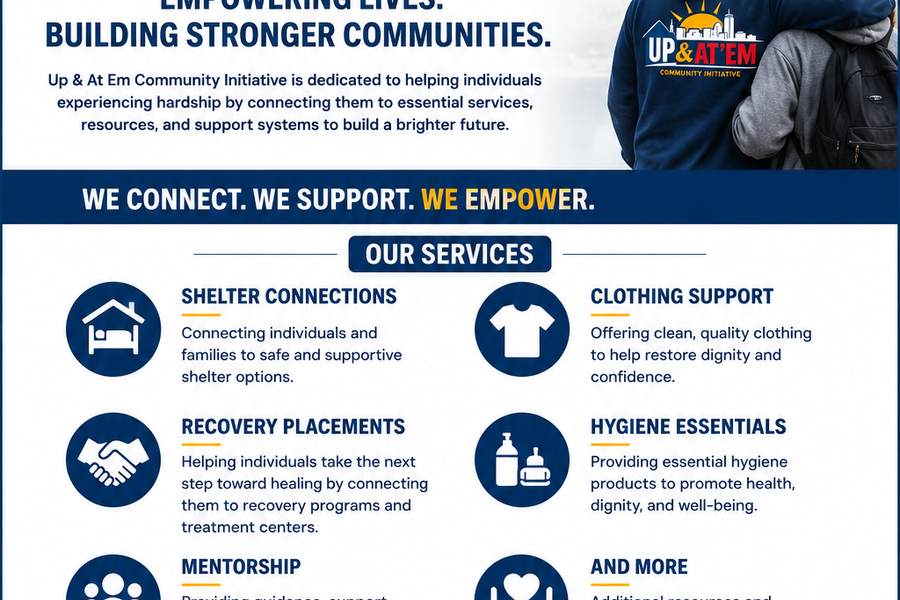
At Up & At Em Community Initiative, our focus is community connection, resource navigation, and helping people understand available pathways. Our work is intended to help reduce the gap between knowing that resources exist and knowing how to begin using them.
A Note About Information and Changing Programs
Behavioral-health programs, eligibility rules, operating hours, insurance participation, and service availability can change. A program that accepted a particular insurance plan or had a certain intake process in the past may have different requirements today.
For that reason, this article intentionally relies on current Massachusetts government information for the core statewide resources described here. Readers should confirm program details directly with the agency, provider, insurer, or helpline before relying on them for time-sensitive care.
This article is educational information. It does not diagnose a mental-health condition, recommend a specific medication, or determine which treatment is appropriate for any individual.
Massachusetts Mental-Health Resources
Massachusetts Behavioral Health Help Line: Call or text 833-773-2445, 24/7. Online chat: masshelpline.com.
988 Suicide & Crisis Lifeline: Call or text 988, 24/7. Online information and chat: 988lifeline.org.
Community Behavioral Health Centers: mass.gov/community-behavioral-health-centers. Massachusetts provides a statewide directory and information about crisis and routine services.
Find a Community Behavioral Health Center: mass.gov/info-details/find-a-cbhc.
Massachusetts Roadmap for Behavioral Health Reform: mass.gov/roadmap-for-behavioral-health-reform.
Massachusetts Department of Mental Health Adult Services: mass.gov/department-of-mental-health-adult-services-ages-19.
Recovery Learning Communities: mass.gov/info-details/recovery-learning-communities.
Finding Mental Health Support in Massachusetts: mass.gov/guides/finding-mental-health-support-in-massachusetts.
MassHealth behavioral-health information: mass.gov/info-details/masshealth-covered-services.
Final Thoughts: Getting Help Does Not Require Knowing the Whole System
Mental-health systems can feel complicated, especially when someone is already dealing with distress, substance use, housing instability, family pressure, financial problems, or other challenges. Massachusetts has built multiple access points, but knowing that a resource exists and successfully reaching it are two different things.
You do not have to understand every program before asking for help. You can start with a question. You can say that you are not sure what you need. You can ask for help finding the right service. And if the first pathway does not work, that does not necessarily mean there is no help available.
For Massachusetts residents, the Behavioral Health Help Line, Community Behavioral Health Centers, 988, MassHealth resources, DMH services, Recovery Learning Communities, and community-based organizations provide different pieces of the larger support system. The goal of navigation is to help people identify the piece that fits their situation and take the next step.
If you are in immediate danger or experiencing a medical emergency, call 911. If you are experiencing emotional distress or a mental-health crisis, call or text 988 or the Massachusetts Behavioral Health Help Line at 833-773-2445. For ongoing needs, use the statewide resources above to begin connecting with care.
Published by Up & At Em Community Initiative. Information checked against Massachusetts state resources available in September 2026.


Great and informative read!